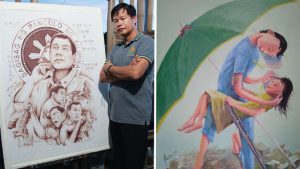
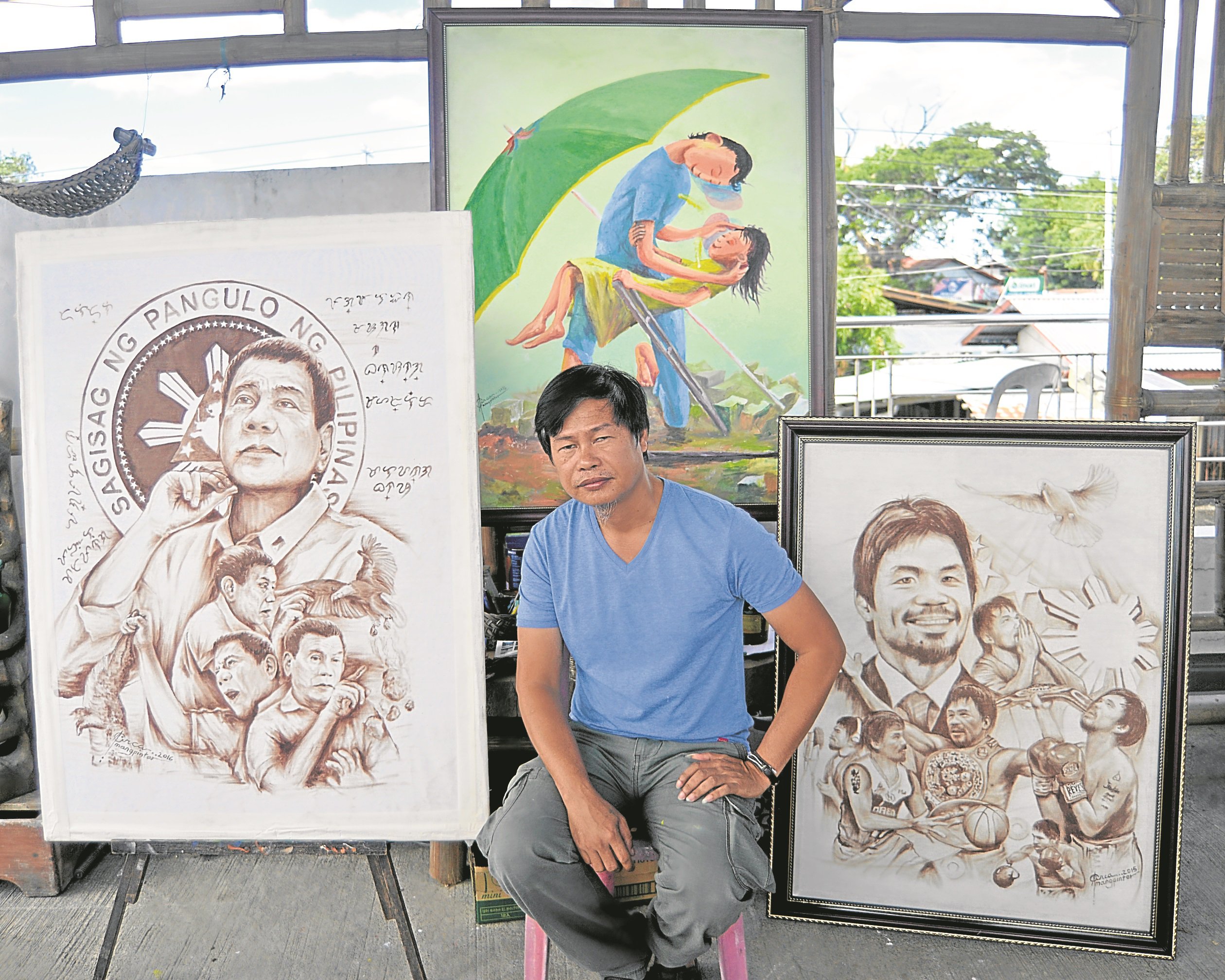
Amangpintor "Lito" is always depicting the life of Pantabangan from the 70s (time where the town of Pantabangan was submerged by the water) to the present with the style of creating image of Minggan on every painting that he made.
Pantabangan has sacrificed its land as it was drowned and made into a dam for the benefit of other towns by providing ample water supply for their crops. His ritual in painting is using his own hair as one of his medium on the canvas with his blood signature at the right side of the paintings. (from wikipedia)
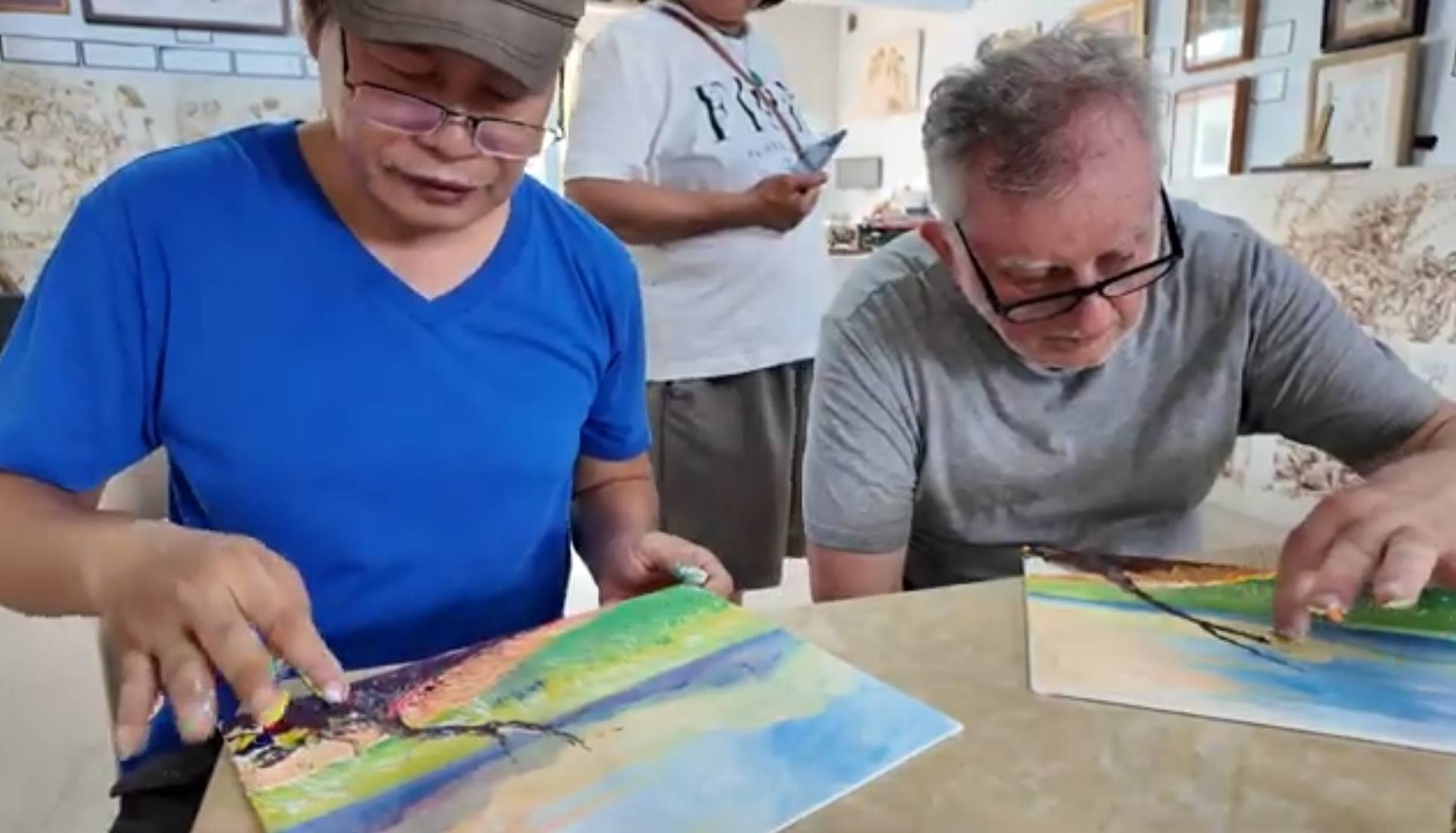
San Jose City, Nueva Ecija — British artist Gerard Whyman visited the Amangpintor Art Museum on May 11, 2025, where he took on a unique challenge posed by celebrated Filipino folk artist Elito “Amangpintor” Circa — to complete a painting using only his hand, fingers, and nails.
Under th ...
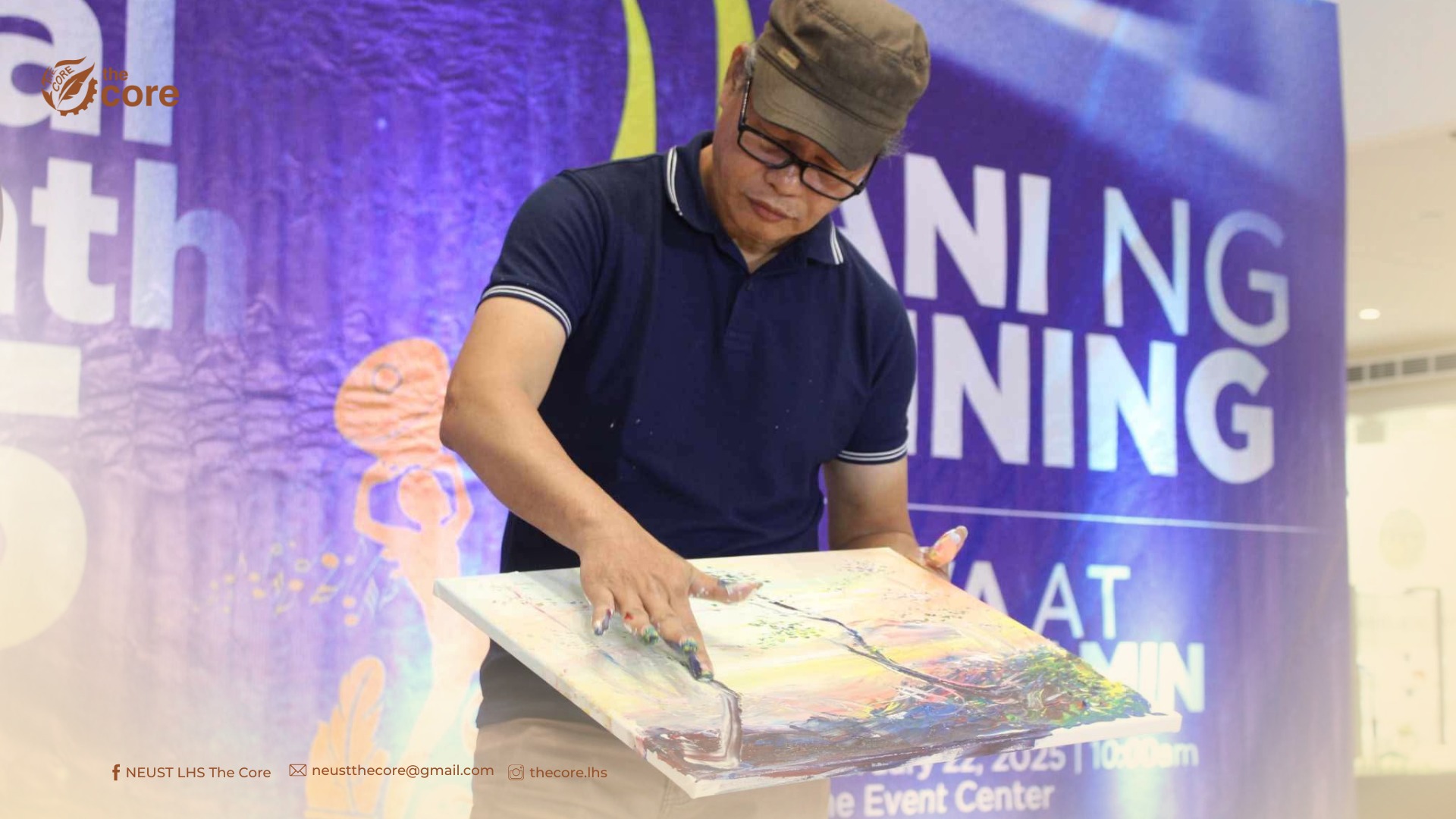
The months of February to April have proven to be among the busiest times for renowned artist Elito Circa, widely known as Amangpintor, as he actively participates in a wide range of art-related events across the country.
With February being National Arts Month in the Philippines, Amangpintor i ...
Nueva Ecija – Sa pagpasok ng Pebrero nitong 2025, na kinikilala bilang Buwan ng Sining, hindi matatawaran ang ambag ng tanyag na pintor ng Pilipinas na si Amangpintor sa pagpapalaganap ng sining sa iba’t ibang panig ng lalawigan.
Sa kabuuan ng buwan, naging abala si Amangpintor sa iba’t i ...
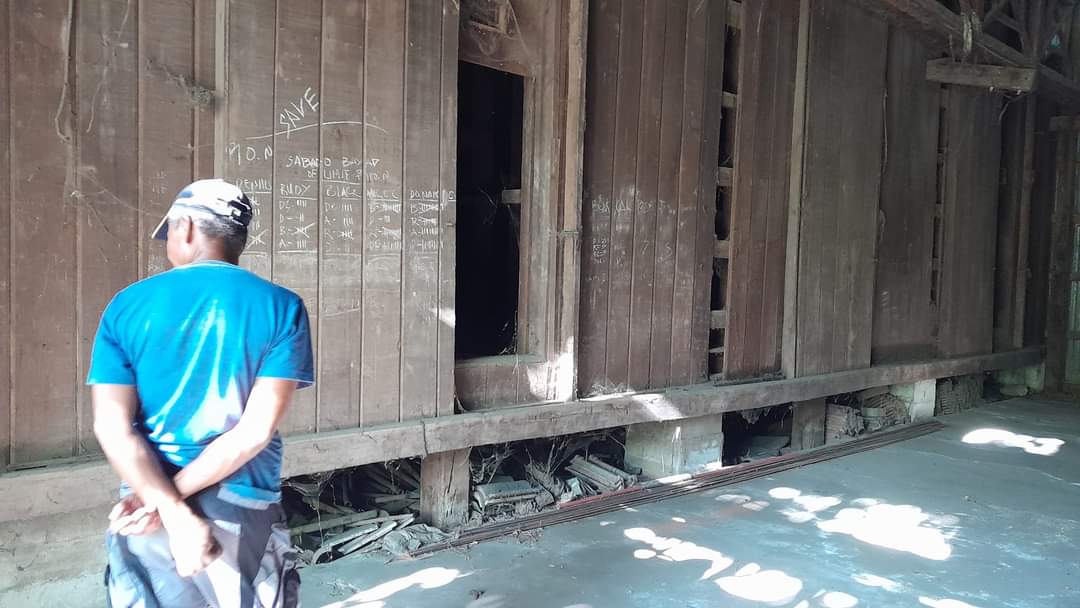
One day, I visited Nimfa Rueda's old warehouse in the heart of the city. To my astonishment, I discovered that it is the oldest traditional Rice Storage (Lumang Kamalig). It's an incredible historical landmark that I had never seen before, connecting me to the past when Central Luzon was ...
“PAWIS at dugo” ang puhunan ng mga alagad ng sining sa paglikha ng kanilang obra. Pinaghihirapan at ginugugulan ng oras upang maisakatuparan ang kanilang bisyon at matiyak ang natatanging kagandahan ng kanilang likha.
Ang pintor na si Elito Villaflor Circa, tubong Nueva Ecija, ay ma ...
A folk artist who draws from—and is revered by—the folk community is Elito Villaflor Circa, the contemporary folk artist of Pantabangan town in Nueva Ecija.
Relatively young at 47, he is not only reverentially called “Amangpintor” (Father Painter) by his people; his artworks are ...
Recently, Daniel Yenko, a student from Manila, interviewed Amangpintor. Here is his question:
Who are you and what is your story?
I am Elito Circa, also known as Amangpintor, a self-taught artist from Pantabangan, Nueva Ecija. I was born into a humble farming family and grew up with limited resources, yet my passion for art grew stronger each day. I painted using indigenous materials and even my own hair and blood when art supplies were scarce. From drawing on the walls of our house to holding exhibits in and outside the Philippines, my journey is a story of determination, cultural pride, an ...
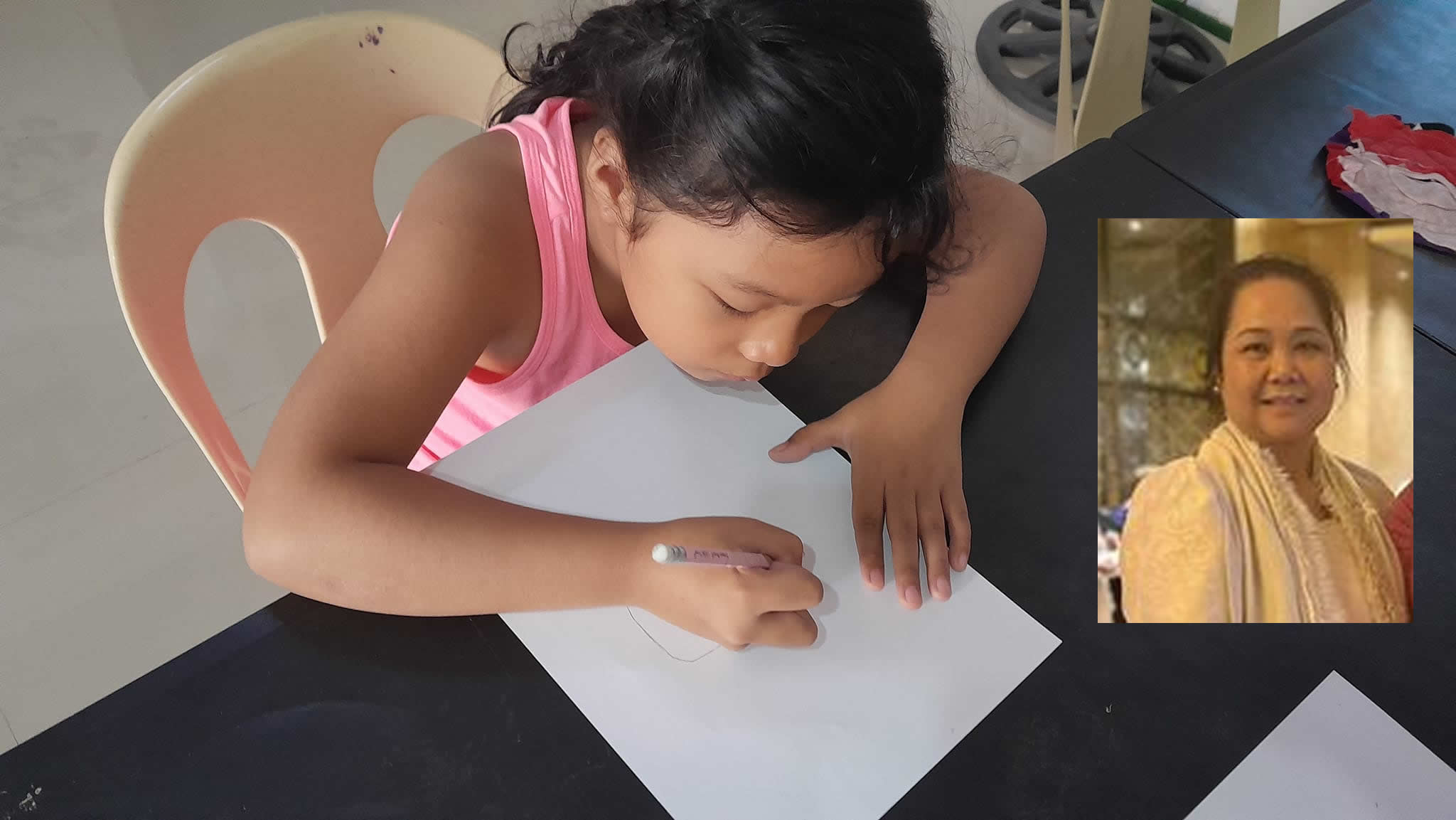
In the heart of San Jose City, a beautiful story of compassion and creativity unfolds, driven by the generous hearts of TEAM Myrna (Nene) Ysais and Evelyn Tabone, and the supportive TEAMS from Australia. Their mission? To light the spark of artistic passion in the lives of two young soul ...
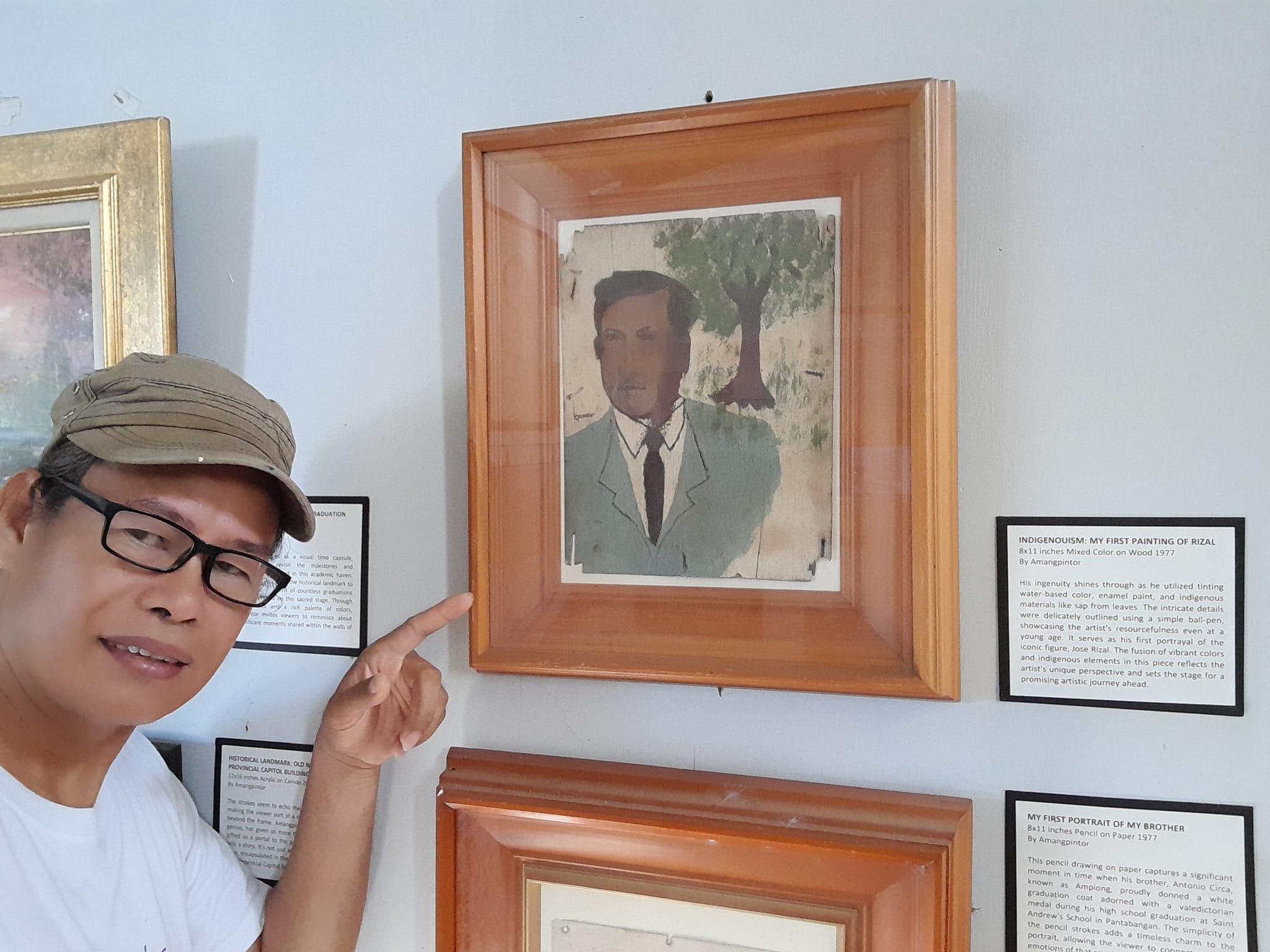
In 1979, the talented artist Amangpintor crafted a remarkable painting that would become a significant milestone in his artistic journey. At the tender age of 9, Amangpintor took on the ambitious task of portraying the revered figure, Jose Rizal.
This particular artwork is not only a po ...
 Loading...